
Transportation Improvements That Could Shape Kings County’s Future
Roads and transportation infrastructure are essential to daily life in Kings County, California. Residents depend on dependable roads to reach their workplaces, schools, medical facilities, shopping centers, and community services. Farmers and agricultural businesses rely on the same transportation network to move crops, machinery, livestock-related supplies, and other goods between rural properties, processing facilities, warehouses, and markets throughout California.
As the region approaches 2027, transportation planning deserves attention from homeowners, commuters, business owners, agricultural operators, and anyone who regularly travels through Hanford, Lemoore, Corcoran, Avenal, or the surrounding rural communities.
Infrastructure improvements can involve much more than building new highways. Projects may include repairing damaged pavement, rehabilitating bridges, improving intersections, replacing drainage culverts, installing accessible sidewalks, upgrading traffic controls, and studying alternatives for managing congestion. Some projects are intended to address immediate maintenance needs, while others require years of planning and environmental review before construction can begin.
Several documented transportation efforts are relevant to Kings County’s outlook for 2027. These include planning for the State Route 198 and Ninth Avenue interchange in Hanford, improvements to drainage infrastructure along state highways, and broader regional transportation investments coordinated through the Kings County Association of Governments (KCAG).
However, residents should understand the difference between a proposed project, a project receiving planning funds, and a project with an approved construction schedule. A transportation plan may identify an important future improvement without guaranteeing that construction will begin in the year mentioned in the plan.
The purpose of this guide is to explain the transportation projects and planning priorities residents should follow in 2027, how road improvements are funded, what construction may mean for local travel, and how to obtain reliable information from the agencies responsible for public infrastructure.
1. Why Road Infrastructure Matters in Kings County
Kings County has a transportation network shaped by its agricultural economy, growing communities, major highways, and extensive rural landscape. Roads must serve passenger vehicles, commercial trucks, agricultural equipment, emergency responders, school transportation, and people walking or cycling.
This variety of transportation needs creates challenges for local planners. A road that works well for light passenger traffic may experience considerable wear when used by heavy trucks. An intersection that functions adequately during quiet periods may become difficult to navigate when commuter traffic, school traffic, and commercial vehicles converge.
Road conditions also affect the cost of doing business. Poor pavement can increase vehicle maintenance expenses, while unpredictable closures can delay deliveries and make it harder for employees to reach work on time. For emergency services, reliable access routes can be particularly important when a major incident or road closure forces responders to find an alternative path.
Infrastructure improvements can help address these problems, but the right solution depends on the location. One corridor may need pavement rehabilitation, while another may require improved drainage, a redesigned intersection, or better pedestrian access.
For residents, following road projects is therefore not simply about finding out when construction cones will appear. It is also about understanding how transportation decisions may influence neighborhood access, business activity, road safety, and future development.
2. State Route 198 and the Ninth Avenue Interchange in Hanford
One of the most important transportation projects to monitor in Kings County is the proposed State Route 198 and Ninth Avenue interchange in Hanford.
What is the proposed interchange project?
The project proposes upgrading approximately 1.4 miles of SR 198 in Hanford from an expressway to a freeway by replacing the existing at-grade intersection at Ninth Avenue with an interchange. The proposal is intended to change how traffic moves through this part of the highway corridor.
An at-grade intersection allows traffic on crossing roads to meet at the same level. Depending on traffic volume, turning movements, signal timing, and road design, this arrangement can create delays and conflict points. An interchange separates certain traffic movements by allowing vehicles to pass above or below another road.
The final design and expected benefits depend on the alternatives evaluated, environmental review, engineering decisions, funding, and subsequent approvals. Residents should consult the official project documents rather than assume every proposed design feature has already been approved.
Why is this project important for local drivers?
SR 198 is an important east-west corridor serving Kings County and connecting communities with destinations elsewhere in the San Joaquin Valley. Residents use the highway for commuting, shopping, appointments, and regional travel. Commercial drivers also rely on it to transport goods and connect with other major routes.
Traffic conditions at a busy intersection can affect the broader corridor. Vehicles slowing to turn, queues forming near signals, and traffic entering or exiting the highway may influence travel times beyond the immediate intersection.
An interchange could change those movements, but the final effect will depend on the completed design and how it connects with the surrounding street network. Construction may also introduce temporary traffic controls before any long-term benefits are realized.
What should residents expect in 2027?
The interchange project is in the planning and environmental review process. The federal permitting dashboard lists July 31, 2027, as the estimated completion date for environmental review and permitting. That is a planning milestone, not a confirmed date for the start of construction.
Residents should therefore avoid treating 2027 as a guaranteed construction year. Further design work, funding decisions, approvals, and project scheduling may be needed before construction can proceed.
People who travel through the SR 198 and Ninth Avenue area should follow announcements from Caltrans and KCAG. Nearby residents and business owners may also want to review public information about the alternatives under consideration and provide feedback when formal comment opportunities are available.
For project information, consult the official Caltrans project page for the SR 198 Ninth Avenue Interchange in Hanford.
3. Drainage Restoration Along Kings County Highways
Road drainage is another major infrastructure issue for Kings County. Although culverts and drainage channels may not be as visible as paved roads or highway interchanges, they play a crucial role in maintaining roadway stability.
Understanding the Kings County drainage restoration project
Caltrans has documented a drainage restoration project involving 49 existing culverts at various locations along State Routes 33, 41, 43, 198, and 269 in Kings County.
The proposed work includes repairing, replacing, or rehabilitating drainage structures that have problems such as rust, damaged joints, deteriorated components, or sediment and debris buildup. The goal is to restore these systems to a condition that supports the proper operation of roadway drainage.
According to the published project schedule, right-of-way acquisition and design are expected to be completed in August 2027, with the project advertised for construction bids in November 2027. Construction is scheduled to begin in April 2028 and finish in April 2030.
These dates are estimates and may change, but they illustrate why residents should distinguish between project development and construction. Although this is a significant infrastructure project to monitor during 2027, the published schedule does not call for construction to begin that year.
Why culverts matter to road safety
A culvert allows water to pass beneath a road or through an embankment. When the structure becomes blocked, damaged, or unable to handle the water flowing toward it, water may accumulate near the roadway or erode the surrounding ground.
Over time, poor drainage can weaken pavement foundations, damage road shoulders, and contribute to potholes or other surface deterioration. In more serious situations, erosion may undermine an embankment or make a section of roadway unsafe.
Maintaining drainage structures helps protect the road itself and can reduce the likelihood that water-related problems will lead to emergency repairs or unexpected restrictions.
How residents can help
Residents who notice a blocked drainage opening, unusual water accumulation, or erosion near a public road can report the problem to the responsible agency. The report should identify the location as clearly as possible and explain what has been observed.
People should not enter drainage channels or attempt to repair culverts themselves. Such work can involve hidden hazards, moving water, heavy equipment, and public right-of-way requirements. The responsible agency can determine whether an inspection or maintenance response is necessary.
For rural residents and agricultural operators, reporting a recurring drainage problem before it becomes severe may help officials identify an issue that deserves closer attention.
4. State Highway Improvements and Maintenance Priorities
Kings County’s transportation future depends on both major capital projects and routine highway maintenance. Rehabilitation work, bridge repairs, pavement preservation, and improvements to roadside safety features help keep existing infrastructure usable.
Pavement rehabilitation
Road pavement deteriorates through repeated traffic loading, exposure to weather, water intrusion, and normal aging. Heavy vehicles can contribute substantial wear, particularly where traffic repeatedly slows, turns, or accelerates.
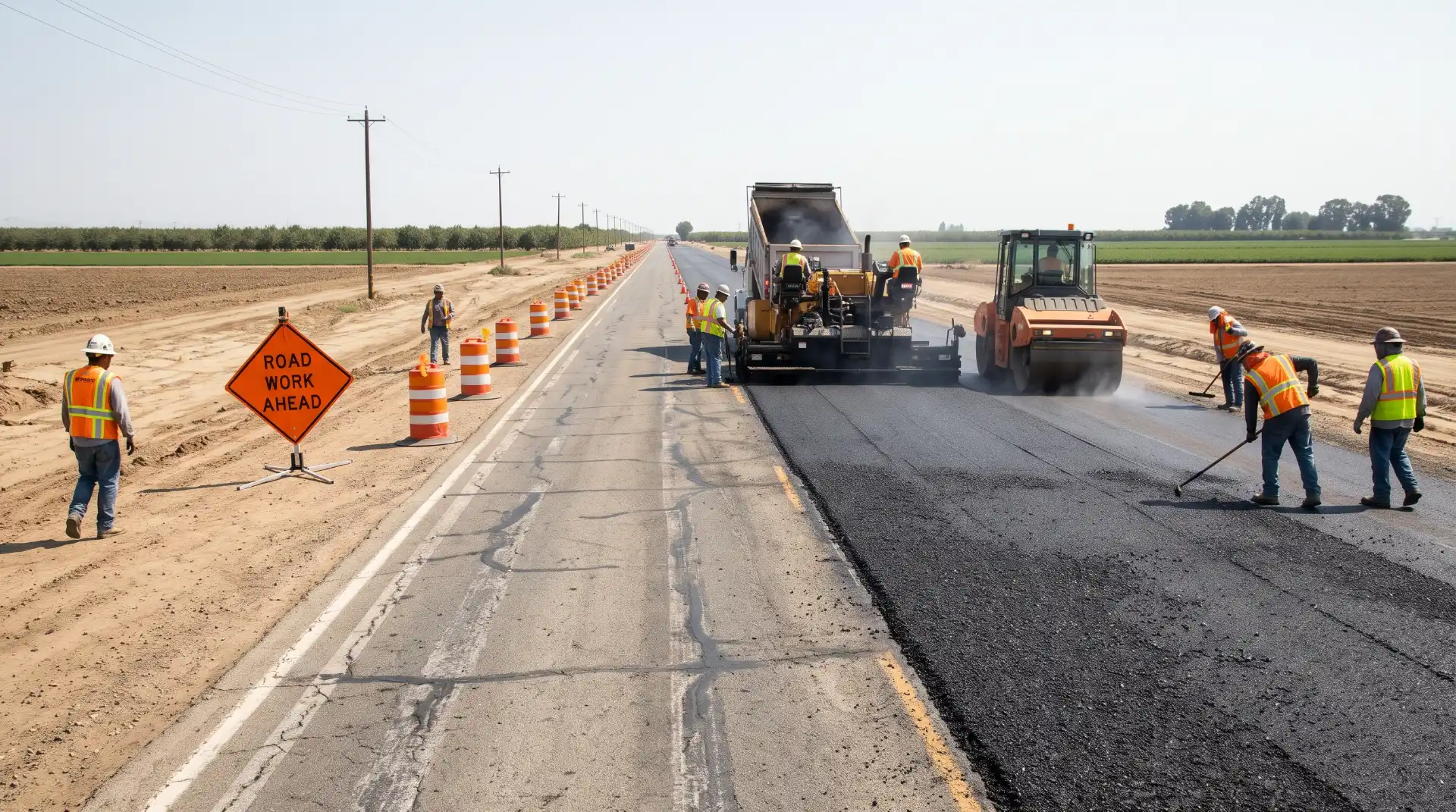
Pavement rehabilitation may involve milling away worn asphalt, applying new pavement, repairing damaged sections, improving road markings, and addressing related roadway features. The exact treatment depends on the road’s condition and the engineering assessment.
For residents, rehabilitation can improve the driving surface and help reduce problems associated with deteriorated pavement. However, construction itself can temporarily produce rough transitions, uneven surfaces, lane restrictions, and delays.
Drivers should slow down near work zones, obey temporary speed limits, and leave additional space between vehicles. A familiar route may behave differently when traffic lanes are shifted or pavement markings are temporarily changed.
Bridge repairs and roadside safety
Bridge maintenance may include work on decks, joints, structural components, protective barriers, and other features that affect the bridge’s condition. Such work can require specialized equipment and carefully controlled construction stages.
Guardrails, signs, lane markings, and traffic management equipment can also form part of a highway safety project. These features help guide drivers, identify hazards, and manage traffic through changing roadway conditions.
Residents should not assume that every maintenance project includes all these improvements. The approved project description and engineering documents determine the actual scope of work.
Checking current highway projects
Caltrans maintains an online list of projects by county. Residents can review the Caltrans District 6 Current Projects page to identify projects relevant to Kings County.
Project schedules can change because of weather, design revisions, funding, contractor availability, or other factors. Before making an important trip, check current traffic information and official notices rather than relying on an old project announcement.
5. Local Roads and the County’s Road Maintenance Responsibilities
State highways are only one part of Kings County’s transportation system. Local roads provide access to homes, farms, schools, commercial properties, public facilities, and smaller communities that may be some distance from a major highway.
The Kings County Roads and Bridges Division reports responsibility for maintaining approximately 944 miles of roads, 106 bridges, and numerous culvert and pipe crossings. Its responsibilities also include emergency storm drainage work and support for traffic, transportation, design, and construction engineering.
These responsibilities illustrate the scale of the maintenance challenge. Thousands of road segments, bridge components, and drainage structures must be inspected, maintained, and repaired over time.
Why local road maintenance is different from highway construction
A large highway project may receive dedicated funding and follow a lengthy engineering and environmental process. Local road maintenance often involves identifying defects, prioritizing repairs, and allocating available resources across a wide network.
Agencies must consider pavement condition, traffic volume, safety risks, drainage, repair costs, and the importance of a road to residents and businesses. A heavily used route may need attention because of its traffic load, while a rural road may deserve priority because it provides an important connection to farms, schools, or emergency services.
Maintenance work may include pothole repairs, grading, shoulder repairs, drainage clearing, sign replacement, and other treatments. Some work can be completed relatively quickly, while major reconstruction requires more extensive planning and funding.
Residents can find county road information through the Kings County Roads and Bridges Division.
How to report a road problem
When reporting a pothole, damaged sign, eroded shoulder, or other roadway problem, provide the nearest intersection, road name, direction of travel, and a description of the issue. If a safe photograph is available, it may help explain the problem.
It is important to contact the agency responsible for the road. A county-maintained road, a city street, and a state highway may be managed by different organizations. Sending a report to the wrong agency can delay the response.
Residents should also understand that reporting a defect does not guarantee an immediate repair. Agencies may need to inspect the site, assess the risk, determine the appropriate treatment, and arrange funding or equipment.
6. Transportation Planning and the Role of KCAG
The Kings County Association of Governments coordinates regional transportation planning for the county and its member jurisdictions. Its work helps local agencies evaluate transportation needs and organize investments across the region.
The Regional Transportation Plan
The Regional Transportation Plan, or RTP, provides a long-term framework for transportation planning. The 2026 RTP and Sustainable Communities Strategy update looks toward 2049 and considers how transportation systems, land use, development, and environmental requirements relate to one another.
A regional plan may identify needs involving highway corridors, local streets, public transportation, walking and cycling facilities, and other transportation services. It helps agencies consider how current investments fit into longer-term community goals.
However, a project appearing in a long-range plan does not automatically mean that it has secured all required funding or is ready for construction. Some projects may remain conceptual or require additional study before they can proceed.
Residents can review KCAG’s 2026 Regional Transportation Plan for the regional planning framework and supporting documents.
Transportation improvement programs
Regional and federal transportation improvement programs provide more specific information about projects being programmed for certain funding periods. They help connect long-term transportation needs with available funding and implementation requirements.
A project may receive money for planning or environmental review before construction funds become available. It may then require detailed engineering, property acquisition, utility coordination, and additional approvals.
Understanding these stages helps explain why a project can be discussed for several years before construction begins. It also helps residents interpret official announcements more accurately.
Why public participation matters
Public meetings and comment periods give residents opportunities to raise questions about road safety, access, neighborhood effects, traffic patterns, and proposed designs.
People who live near a project may know about recurring traffic backups, difficult turns, drainage problems, or pedestrian access issues that are not obvious from a map. Providing specific observations can help planners understand local conditions.
Residents should focus their comments on the issue, its location, the circumstances in which it occurs, and the potential improvement they believe would help. Clear feedback is more useful than simply stating that a project is good or bad.
7. How Road Construction Can Affect Commuters
Even well-planned infrastructure projects can cause temporary inconvenience. Lane closures, traffic shifts, reduced speeds, and detours can affect residents traveling to work, school, appointments, and other destinations.
Allow extra time for travel
Construction delays can be unpredictable, particularly when several vehicles merge into a single lane or traffic must stop for equipment entering the roadway.
If your regular route passes through an active work zone, consider leaving earlier during periods of construction. This is particularly important when traveling to a medical appointment, court appearance, work shift, or other commitment with a fixed arrival time.
Do not assume that a closure will occur at the same time every day. Contractors may adjust schedules based on weather, materials, equipment availability, and the stage of construction.
Plan alternative routes carefully
An alternative route should be safe and suitable for your vehicle. Rural roads may be narrow, poorly lit, or unsuitable for large trucks. Some roads may have weight restrictions, limited shoulders, or access restrictions.
Avoid using private farm roads or restricted routes to bypass a traffic queue. These roads may not be designed for public through traffic and can create hazards for agricultural operations.
If a road closure affects an important trip, consult official detour information and use established public roads. Follow posted signs even when a navigation application suggests a different route.
Watch for temporary traffic controls
Work zones may have temporary lane markings, barriers, reduced speed limits, flaggers, or changes in traffic direction. Drivers should reduce speed when approaching these areas and watch for workers and equipment.
Avoid sudden braking, weaving between lanes, or following another vehicle through a closed area. Never drive around barricades to save time.
Construction workers need sufficient space to do their jobs safely. Drivers can help protect workers and other motorists by staying alert, obeying signs, and avoiding distractions.
8. What Transportation Improvements Mean for Agriculture and Local Businesses
Kings County’s economy depends significantly on agriculture and related industries. Reliable roads help connect farms with processing facilities, storage locations, equipment suppliers, workers, and markets.
Agricultural transportation needs
Agricultural operators may use a combination of state highways, county roads, and local access roads. Depending on the operation, vehicles may include pickup trucks, tractors, trailers, heavy trucks, and specialized equipment.
Road construction can affect delivery schedules, equipment movements, and access to fields. A temporary restriction that seems minor to a passenger vehicle may have a greater effect on a large truck or piece of agricultural machinery.
Farm operators should monitor project notices and coordinate deliveries around known restrictions when possible. Before selecting an alternative route, commercial drivers should confirm that it is suitable for their vehicle and load.
Business access during construction
Retail stores, restaurants, repair shops, service providers, and other businesses may experience changes in customer access when work occurs nearby.
Business owners should communicate clearly about available entrances, parking arrangements, and temporary access changes. Updating business websites or customer messages can reduce confusion when a familiar approach is temporarily blocked.
Delivery operators should check whether construction affects turning movements, loading zones, or truck access. They may also need to coordinate delivery windows with suppliers and customers.
Although construction can create short-term disruption, improvements may support more reliable travel over time. The size of any economic benefit depends on the project’s design, location, and effectiveness, so businesses should avoid assuming that every road project will automatically increase sales or property values.
9. Pedestrian Facilities, Accessibility, and Bicycle Safety
Transportation infrastructure serves people who do not always travel by car. Sidewalks, crossings, curb ramps, bicycle facilities, and other features help residents reach schools, parks, shops, transit stops, and community services.
Accessible sidewalks and crossings
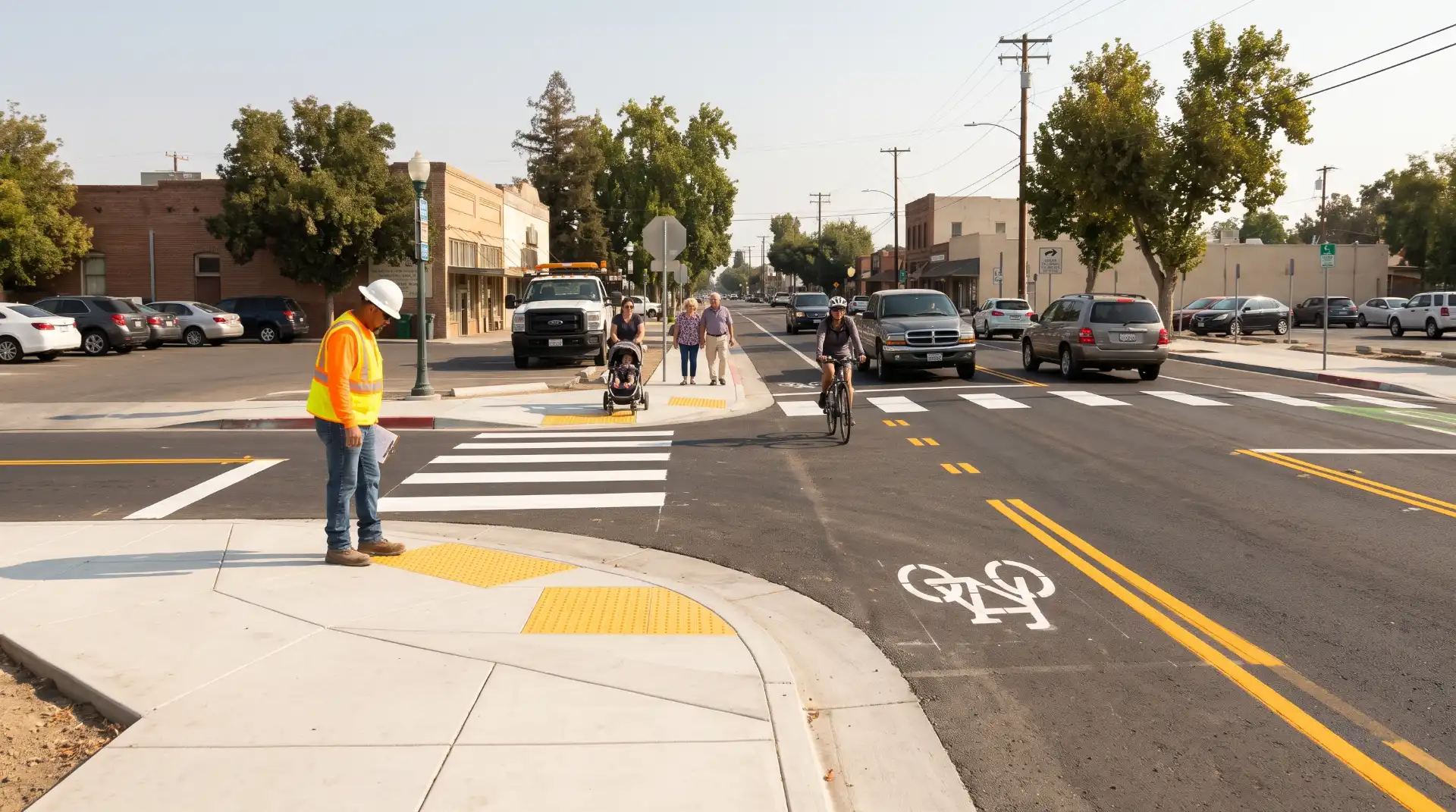
Sidewalks and curb ramps are especially important for people who use wheelchairs, walkers, or mobility aids. They can also benefit older adults, parents pushing strollers, and residents who have difficulty navigating uneven pavement.
A pedestrian route is most useful when it is continuous and accessible. A sidewalk that ends abruptly or a curb that cannot be navigated safely can make a short journey difficult.
Residents who notice damaged sidewalks, missing curb ramps, or unsafe crossings should report them to the appropriate city, county, or state agency. The responsible agency can determine whether repairs or additional evaluation are necessary.
Bicycle and pedestrian safety
Kings County’s roads include urban streets, highways, and rural routes where passenger vehicles, commercial trucks, agricultural equipment, pedestrians, and cyclists may share space.
Drivers should check carefully for pedestrians and cyclists when turning, entering driveways, passing parked vehicles, and approaching intersections. Larger vehicles may have blind spots that make it difficult to see smaller road users.
Cyclists should use appropriate lights when required, remain visible, obey applicable traffic laws, and use designated bicycle facilities where available. Pedestrians should use marked crossings where practical and confirm that approaching vehicles can stop before entering traffic.
Infrastructure improvements can make walking and cycling more practical, but the effectiveness of any facility depends on design, maintenance, and its connection to the surrounding network.
10. Drainage, Heavy Rain, and Rural Road Resilience
Road drainage is particularly important in areas with extensive farmland and long stretches of rural roadway. Water that accumulates on or beneath a road can damage pavement, erode shoulders, and interfere with safe travel.
Why drainage maintenance matters
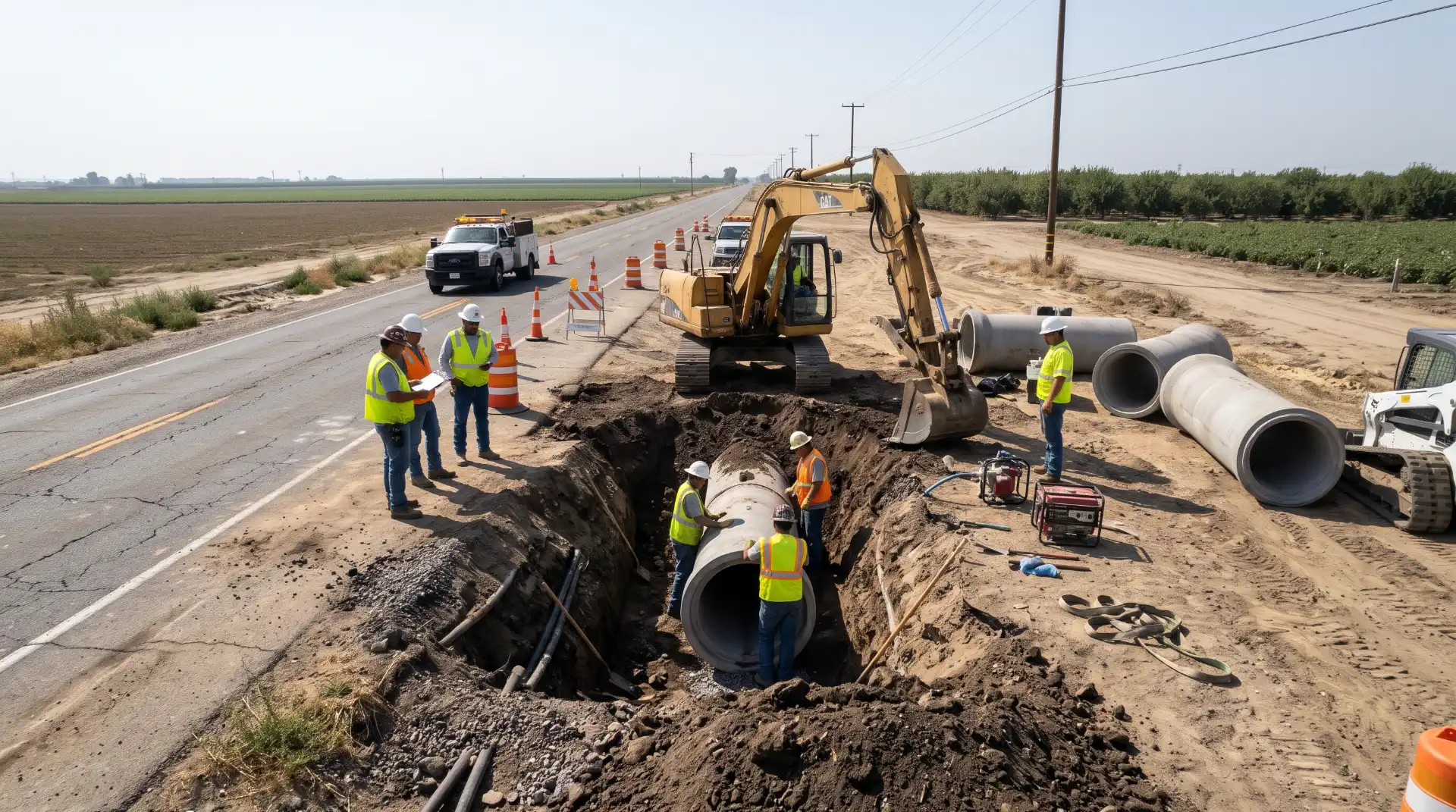
Culverts and drainage channels help water move through or beneath roadway embankments. When they become blocked by sediment or debris, water may collect in places where it can damage the road.
Maintaining drainage infrastructure helps protect the road’s supporting materials and may reduce the likelihood of expensive emergency repairs. The proposed Kings County culvert restoration project is an example of how agencies address these less-visible but important infrastructure needs.
Because the published construction schedule extends from 2028 to 2030, residents should not expect the entire culvert restoration effort to be completed during 2027. The design and right-of-way milestones planned for 2027 are part of the preparation for later construction.
Safe driving during wet weather
Residents should check weather forecasts and road conditions before traveling during heavy rain. Water may conceal potholes, debris, or damage to the road surface, particularly at night.
Never drive through floodwater when its depth or the condition of the road beneath it is unknown. Do not bypass road closure signs or barricades. If authorities advise against travel on a particular route, use a safe alternative.
If you encounter a drainage problem on a public road, report it to the responsible agency rather than attempting repairs yourself. Proper inspection can determine whether the problem requires routine maintenance or a more extensive engineering response.
11. How Transportation Projects Are Funded
Road projects require funding for planning, engineering, environmental review, property acquisition, construction, and ongoing maintenance. The funding source depends on the type of project, who owns the road, and the requirements associated with the available program.
State, federal, and local funding
Some projects receive state transportation funds, while others use federal funding or a combination of funding sources. Local agencies may also contribute resources to projects under their responsibility.
A major highway project may require coordination among Caltrans, KCAG, local governments, and other agencies. A local street repair may follow a different funding and approval process.
Residents should examine project documents carefully because planning funds are not the same as construction funding. A project can be approved for study without having all the resources required to build it.
Why costs and schedules change
Transportation projects can take longer than originally anticipated. Engineering changes, environmental requirements, property issues, utility conflicts, contractor availability, and construction costs can all affect the schedule.
When costs rise, an agency may need to revise the project scope, identify additional funds, or adjust the construction timeline. These changes do not necessarily mean that the project has been abandoned, but they can affect when work is delivered.
Residents should check the publication date of a project document and look for updated schedules or official amendments. An older plan may not reflect current circumstances.
Monitoring public investment
Residents who want to understand how transportation funds are allocated can review KCAG planning documents, public meeting materials, agency budgets, and official project pages.
Useful questions include whether funding is intended for planning or construction, what work is included in the approved scope, what milestones remain, and how the agency will communicate construction restrictions.
These questions help residents understand what a project will actually deliver rather than relying only on a headline or an early proposal.
12. How to Find Reliable Road Project Updates in 2027
Reliable information is essential when a project may affect a daily commute or business delivery. Residents should use official sources for confirmed schedules, closure notices, and project descriptions.
Caltrans is the primary starting point for state highway projects. Its District 6 project listings identify transportation work across the region and provide contact information for questions. KCAG is useful for regional plans and transportation improvement programs. The county’s Roads and Bridges Division is the appropriate starting point for many county-maintained road issues.
For an immediate trip, look for current traffic advisories rather than relying only on a general project page. A project description may explain the overall work without showing every temporary lane closure.
Residents can also contact the responsible agency when an online notice does not answer a specific question. Provide the route, nearest intersection, direction of travel, and date of travel to make the inquiry easier to address.
13. A Practical Checklist for Kings County Residents
Residents can prepare for infrastructure work by taking a few straightforward steps.
First, identify the roads you use most often and monitor project announcements that concern those routes. Commuters who use SR 198, agricultural operators who rely on rural highways, and families who travel between communities may have different transportation priorities.
Second, plan for delays during active construction. Allow additional time for important appointments and identify a safe alternative route before leaving.
Third, maintain your vehicle. Proper tire pressure, functioning lights, good windshield wipers, and adequate tire tread can help you respond to changing road conditions.
Fourth, drive cautiously through work zones. Obey temporary signs, leave room between vehicles, watch for workers, and avoid distractions.
Fifth, report significant road hazards to the correct agency. Provide a precise location and description rather than assuming another person has already reported the problem.
Finally, participate in public planning when a project affects your neighborhood or business. Reviewing proposed changes and providing specific comments can help agencies understand community concerns.
14. Looking Beyond 2027: Kings County’s Long-Term Transportation Future
Transportation planning extends well beyond one construction season. The projects being studied or prepared during 2027 may influence how roads are maintained, how intersections function, and how residents access jobs and services in the future.
The regional planning framework through 2049 gives agencies an opportunity to consider long-term needs alongside current maintenance priorities. This includes keeping existing infrastructure in serviceable condition, supporting commercial transportation, improving accessibility, and addressing drainage and safety issues.
For Kings County, maintaining existing roads is as important as evaluating major new projects. Pavement preservation, bridge maintenance, culvert restoration, and roadside safety improvements can help protect public investments and support dependable travel.
At the same time, larger projects such as the proposed SR 198 and Ninth Avenue interchange require careful planning, public participation, and coordination among agencies. Their eventual benefits will depend on the final design, the funding available, and how the improvements connect with the wider road network.
Residents should evaluate transportation announcements by asking what problem the project is intended to solve, what stage it has reached, and when the agency expects the next milestone. This approach makes it easier to distinguish a long-term proposal from a construction project that is ready to begin.
Conclusion: Stay Informed About Kings County Road Improvements
Kings County’s transportation network is essential to daily travel, agricultural activity, local businesses, and community development. As 2027 approaches, residents should follow highway planning, local road maintenance, drainage restoration, and accessibility improvements that may influence the region’s transportation system.
The SR 198 and Ninth Avenue interchange is an important planning effort to monitor, with environmental review and permitting milestones expected during 2027. The proposed restoration of 49 drainage culverts is another significant project, although its published schedule anticipates construction beginning in 2028 rather than 2027. Local road maintenance remains equally important because it affects the roads residents use every day.
Residents can prepare by checking official announcements, allowing extra time during construction, planning suitable alternative routes, driving carefully through work zones, and reporting road hazards to the correct agency. Those who live or operate businesses near proposed projects can also participate in public meetings and provide specific feedback.
Infrastructure improvements do not happen all at once, and schedules can change. By staying informed through KCAG, Caltrans, and Kings County’s public works resources, residents can better understand transportation priorities and prepare for changes that may affect their daily lives.
The long-term goal is a transportation network that supports safe travel, reliable access, local economic activity, and the changing needs of Kings County communities.